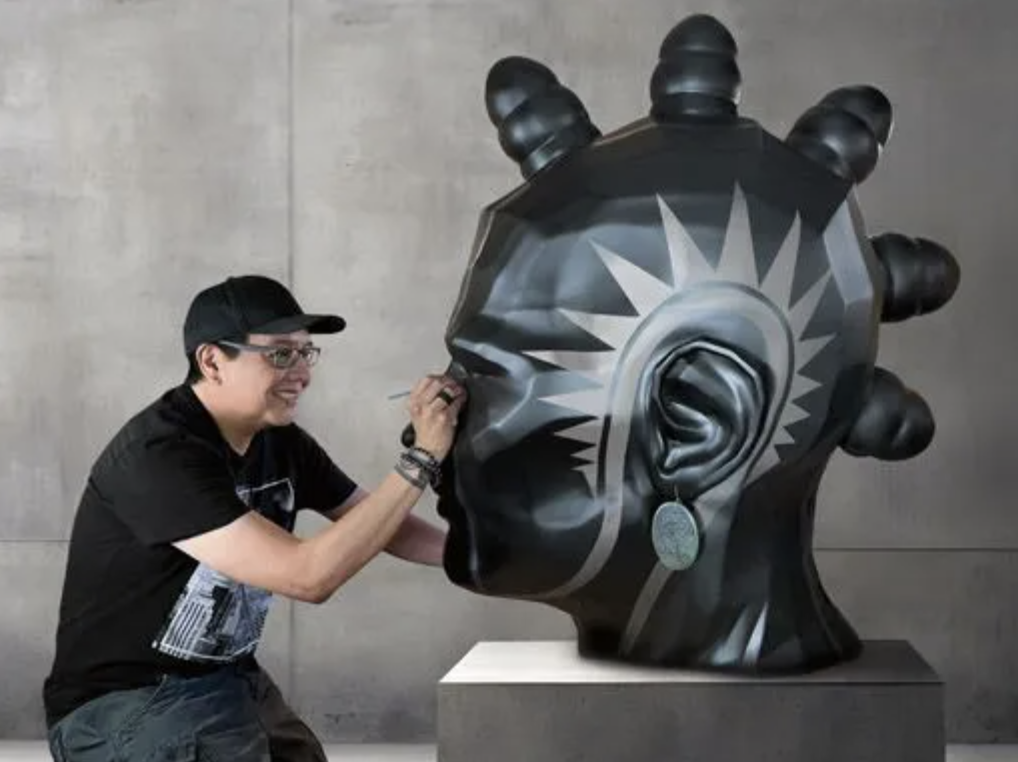
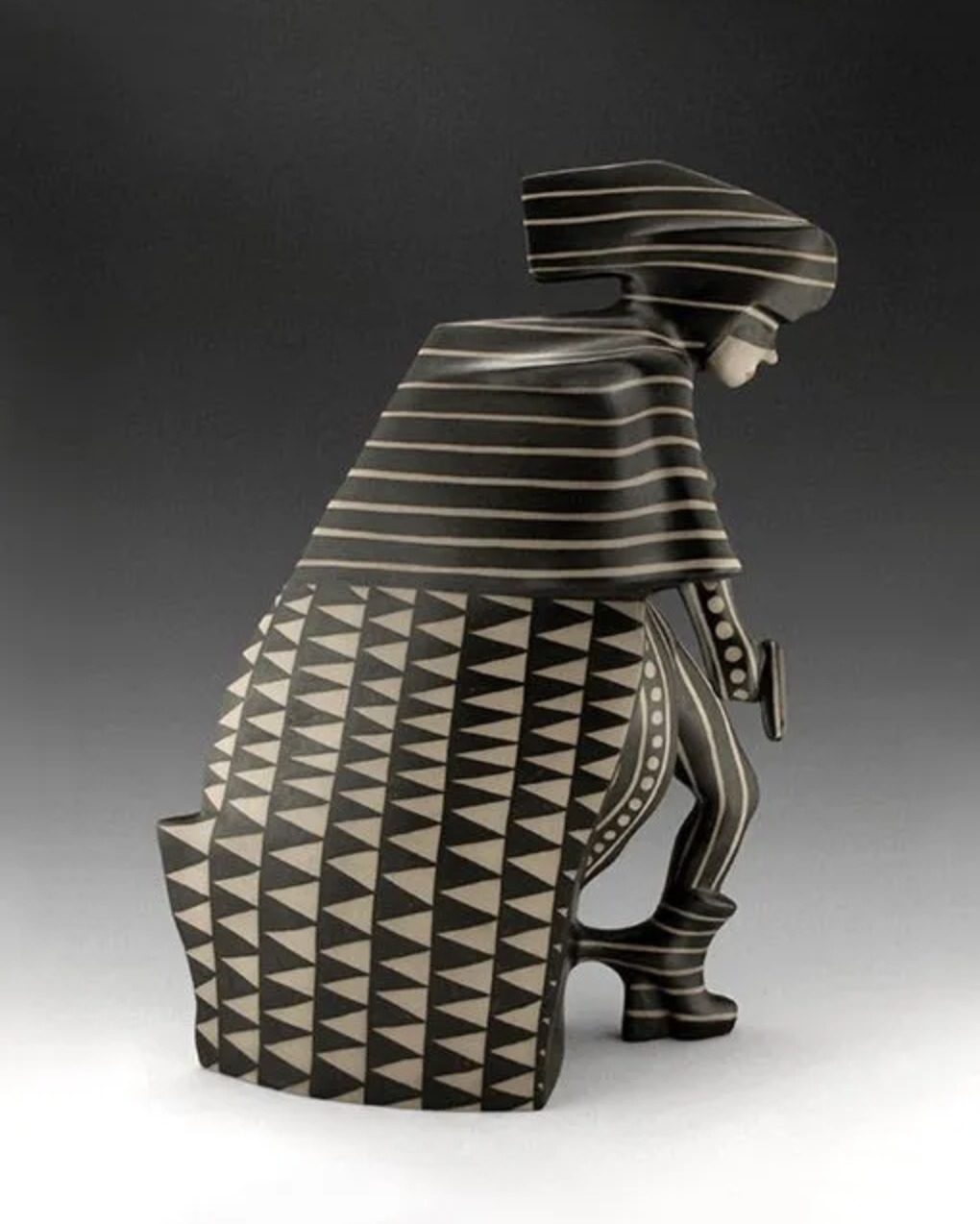
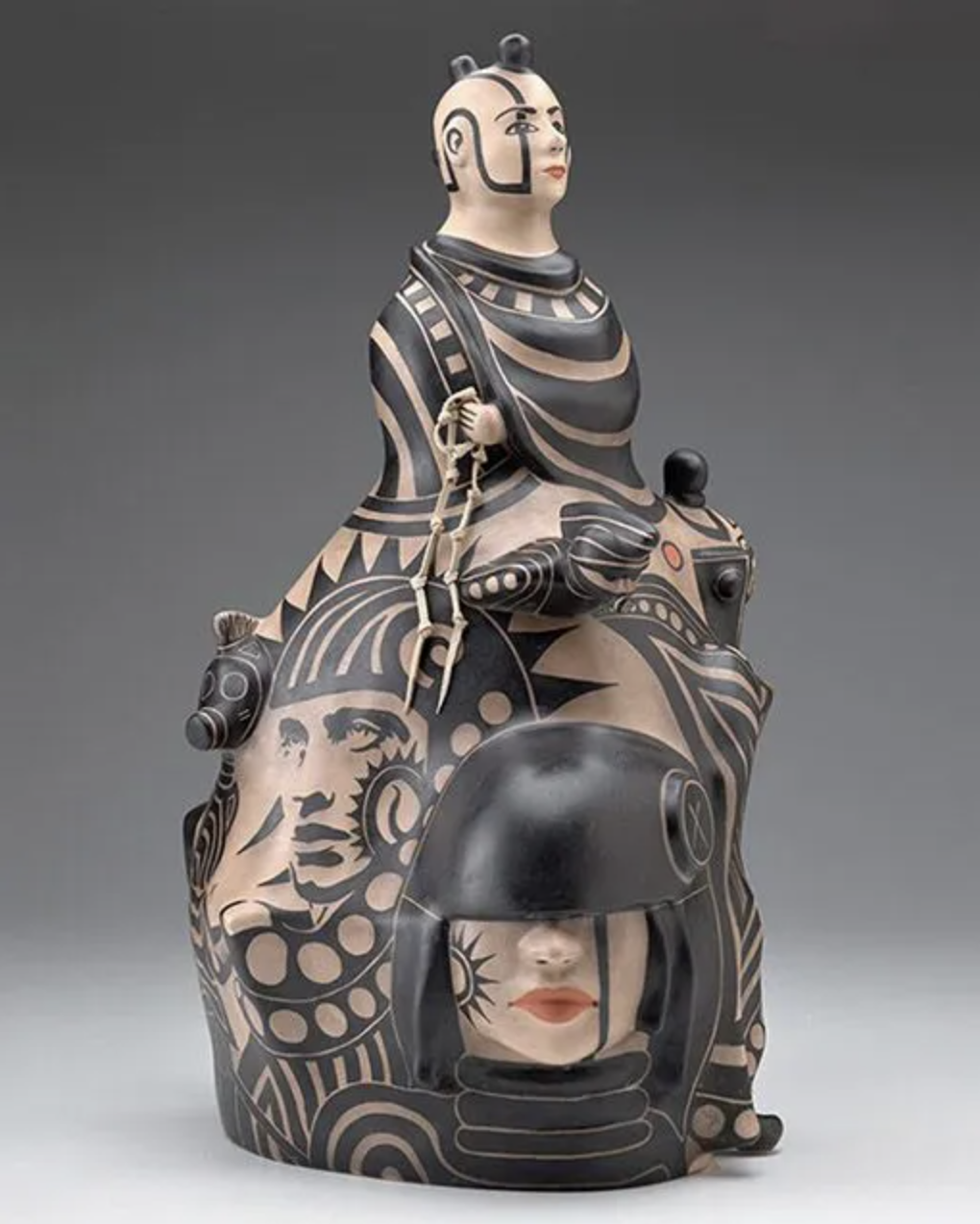
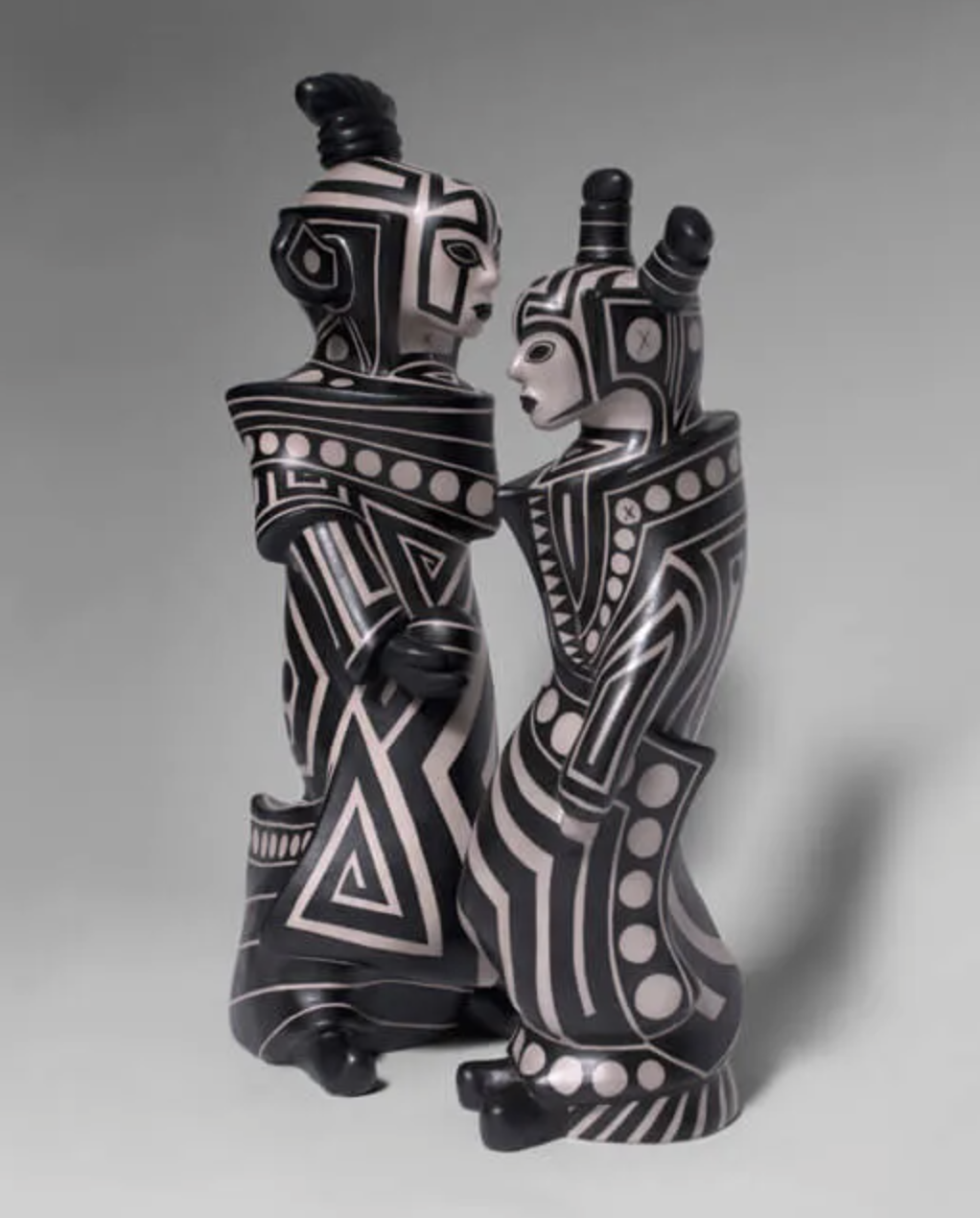
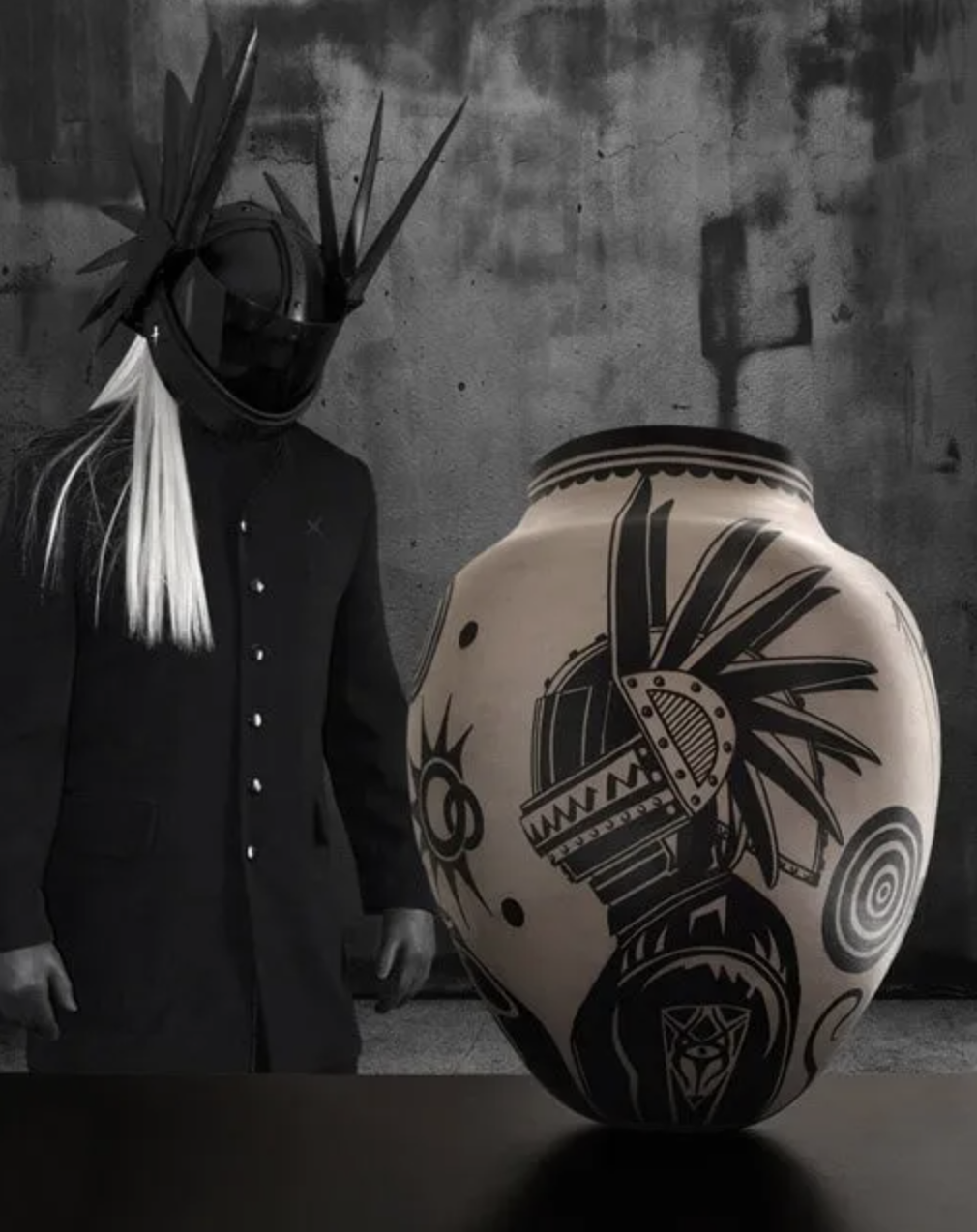
Join us for a conversation with story teller and Pueblo artist Virgil Ortiz as he discusses his artistic process, which involves channeling the "Clay Mother" and his indigenous ancestors to create his pieces. Learn how he uses various mediums, including film, to educate people about the Pueblo Revolt and preserve his culture's traditions.
In this episode, Ortiz expands on how his work serves as social commentary, mirroring the 19th-century tradition of using figurative pottery to record the arrival of railroads and circuses. He shares the specific historical mechanics of the 1680 uprising, such as the use of knotted cords to synchronize the revolution, and explains how he translates these events into a cinematic saga featuring nineteen distinct character groups. By setting his narrative in the year 2180, he merges ancient methods—like processing wild spinach for permanent pigment—with modern tools such as 3D modeling and digital storyboarding to reach a generation raised on Star Wars and sci-fi. He specifically emphasizes the matriarchal strength of his community by centering a female protagonist in his hero’s journey, honoring the aunts and grandmothers who serve as the backbone of Pueblo society. Beyond the studio, Ortiz discusses his personal philosophy of dismantling imaginary hurdles and calibrating the mind toward light, viewing his vast archive of photography and film as a permanent record of resilience. From his night owl studio sessions to his efforts in diversifying global ceramic conferences, he illustrates how an artist can act as a bridge between the ancestral technology of Chaco Canyon and the digital landscapes of the future.